
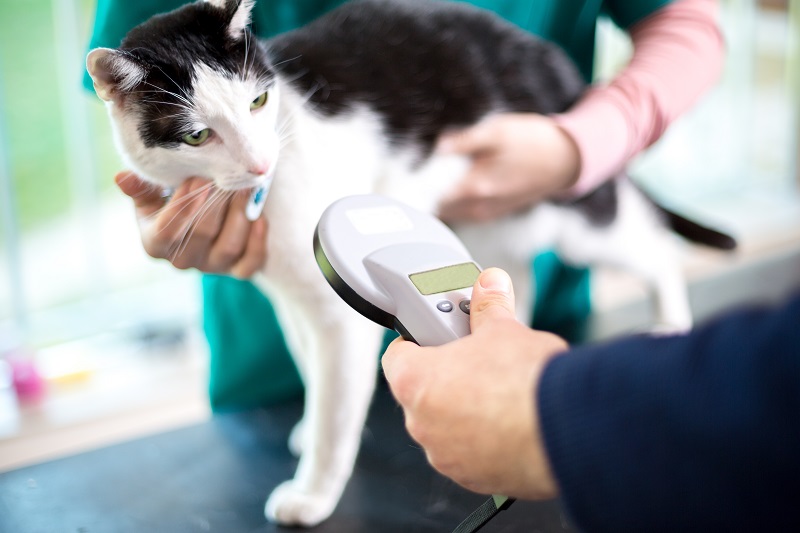
Even the most careful pet owner can experience a frightening moment when a pet slips through an open door, escapes from the yard, or breaks free from a leash. Collars and identification tags are helpful, but they can become damaged, fall off, or be lost. Microchipping provides your pet with a permanent form of identification that can increase the chances of being reunited if they ever become lost.
Request an AppointmentWhat Is a Microchip?
A microchip is a very small electronic identification device, approximately the size of a grain of rice, that is placed beneath your pet’s skin. Each microchip contains a unique identification number that can be detected using a compatible scanner.
When a lost pet is brought to a veterinary hospital or animal shelter, staff can scan for a microchip. The identification number can then be used to locate the pet owner’s registered contact information through the appropriate microchip registry.
Is Microchipping Safe?
Pet microchips are designed to remain in place for your pet’s lifetime. They do not require batteries or an internal power source and contain no moving parts. The materials used are designed to be compatible with the body, and complications are uncommon.
Once implanted, the microchip generally remains beneath the skin and provides a permanent form of identification that cannot be accidentally removed in the same way as a collar or identification tag.
What to Expect at a Microchipping Appointment
Microchipping is a quick and straightforward procedure that can often be performed during a routine veterinary appointment. Using a sterile applicator, the veterinarian places the microchip beneath the skin, typically between the shoulder blades. The process takes only a few moments and is similar to receiving a routine vaccination.
After the microchip has been placed, you will receive information explaining how to register it. Registration is an essential part of the process because it connects your pet’s unique microchip number with your contact information.
It is equally important to keep your registration details current. If you move, change your telephone number, or update your email address, remember to update the information associated with your pet’s microchip. Accurate contact information makes it easier for a veterinary hospital or shelter to reach you if your pet is found.
What Happens if Your Pet Gets Lost?
If your pet becomes lost and is brought to a veterinary hospital, shelter, or other facility with a microchip scanner, staff can scan your pet for identification. If a microchip is detected, its unique number can be used to access the registered owner information through the appropriate database.
When the registration information is accurate and up to date, the organization can contact you and help begin the process of reuniting you with your pet.
Microchipping provides an additional layer of identification and protection for your pet in case they ever become separated from you. Contact Springfield Animal Hospital to schedule a microchipping appointment and help give your pet a permanent connection back home.